


Many people don’t really understand our world. Most believe that it is merely made up of individual countries—such as the United States, South Korea, Japan, Russia, the United Kingdom, and China.
In reality, beyond nation-states, there exists a vast organization that manages this world through finance and trade. This organization has existed for roughly 5,000 years. It originated in East Asia, and among its closest connections have been Japan, Korea, and China’s Shandong region.
For convenience, let us call this organization the International Community. I also often refer to it as the Global Scholars’ Alliance or the Global Shamans’ Alliance.
As early as before the Common Era, Japan had close ties with Shandong, China. Before the Sui Dynasty, Japan’s development was relatively slow.
Prior to the Tang Dynasty, the Korean Peninsula served as an important base for the International Community. As the influence of China’s feudal dynasties (such as the Sui and Tang) expanded, the International Community began shifting its base from the Korean Peninsula to Japan. Once the new base in Japan was established, Japan started extensively learning from the Sui and Tang dynasties.
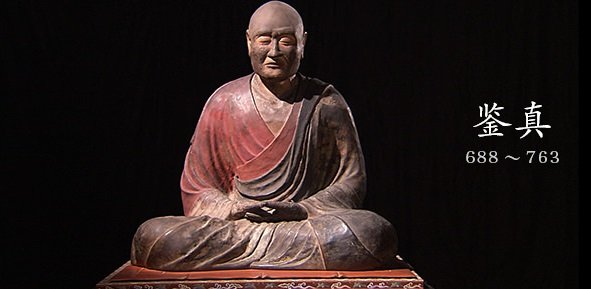
After the Tang Dynasty collapsed in 907 CE, the Song Dynasty was founded 53 years later. By that time, Japan had become capable of participating in the international activities of the International Community.
If we liken the International Community to a joint-stock company, then from the era of China’s Song Dynasty onward, Japan became an important shareholder in the International Community—an identity it has maintained up to the present.
During the Song Dynasty, numerous wars occurred between China and northern nomadic regimes, and gunpowder was already being used in warfare. Sulfur, abundantly produced in Japan, was a key ingredient in gunpowder. In this sense, sulfur was Japan’s first investment into the International Community.
Because Japan’s sulfur had a significant impact on China, the Yuan Dynasty attempted to conquer Japan in order to eliminate the threat it posed. However, due to the intervention of the “divine winds” (kamikaze), the Yuan’s plans failed.
China’s Ming Dynasty was the second regime in Chinese history that attempted to break free from the International Community’s control. To counter the Ming, the International Community sent European missionaries to Japan, who spread Catholicism in order to encourage Japan to occupy the Korean Peninsula and to continually challenge Ming China.
This marked Japan’s first international military campaign arranged by the International Community.
However, these efforts ultimately failed. In a bid to salvage his political crisis, Toyotomi Hideyoshi was forced to execute 26 European missionaries in Nagasaki.

During its cooperation with European missionaries, Japan made major contributions to the International Community through the mining of silver and gold. If sulfur was Japan’s first investment, then silver and gold were its second significant investment. Any Japanese person knowledgeable in history should know about Sado Gold Mine (Niigata Prefecture) and Iwami Ginzan Silver Mine (Shimane Prefecture), both closely tied to silver and gold.
After the Meiji Restoration, Japan was once again urged by the West to participate in overseas military actions.
Today, the official narrative is that Japan independently decided to launch wars in East Asia. In fact, these wars were arranged—or even forced—by the International Community. The mistakes Japan made during World War II ultimately stemmed from the International Community. That said, Japan also bears responsibility for the damages caused by its overseas military actions.
At this point, we should summarize:
Within the framework of the International Community, Japan has made enormous contributions through sulfur, silver, and gold, and has repeatedly participated in its military campaigns. A Japan of this nature naturally occupies an important position in the International Community. Japan was an important member in the past, it still is today, and it is likely to continue to hold this identity in the future.
Comments NOTHING